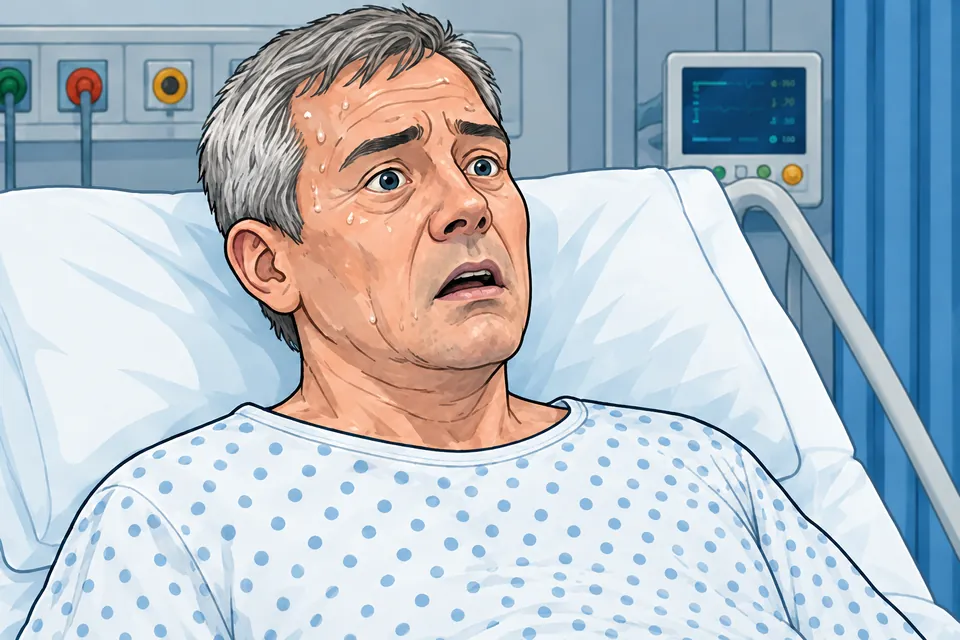
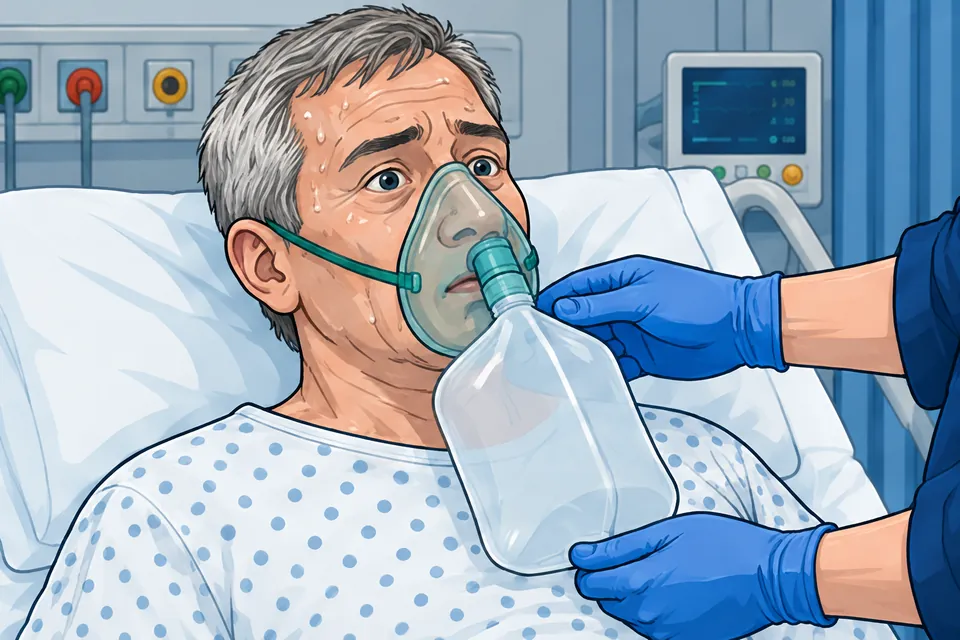
An A to E station: you say “Fifteen litres, non-rebreather”, the oxygen mask goes on, and Mr Mitchell’s oxygen saturation climbs from 89 to 94 percent.
Station 3Emergency departmentED6:42
Live observations
SpO2
8994%
HR
112
RR
24
BP
148/92
You
“Fifteen litres, non-rebreather.”
A
B
C
D
E
Not just voice histories. Whole OSCE stations that react to what you do. Put the mask on and his sats climb. Miss the ECG and the examiner notices.
We track what you know. You cover the whole syllabus.
MedFluent tracks how well you know every presentation, condition and medicine on the MLA map. It sees what you’ve nailed, what’s fading and what you haven’t touched yet, and builds today’s route from that. Follow it and the syllabus gets covered. No spreadsheet required.
You are here
Chest painCardiovascularFading · 4 min
BronchiolitisChild healthNew · 6 min
SalbutamolRespiratoryReview · 4 min
Done for today14 min
Your OSCE is eight minutes long. Go in having done it fifty times.
History
A patient who answers like a patient, not a textbook.
A to E
Obs that move because of what you do, and a patient who decompensates because of what you don’t.
Examination
Narrate your exam as you would to the patient. The findings appear.
Handover
Call your senior about a sick patient. Get feedback on your SBAR.
Then the marking: every domain scored 1 to 5, feedback on your phrasing and your flow, and the question you forgot to ask.
Data gathering
5 out of 5
Management plan for emergency and acute presentations
4 out of 5
Investigations and interpretation of results
3 out of 5
You didn’t ask for a 12-lead ECG.
On paeds? Your new topics are paeds.
Tell us where you’re placed and the new material follows you. Wheezy babies this week. Chest pain in ED next week. Last rotation’s reviews keep coming, so what you learned in September is still there in May.
Child health
Acute and emergency
Cardiovascular
Obstetrics and gynaecology
Mental health
Respiratory
General practice
We ask before we tell.
Write or tell us everything you know about chest pain. We show you what you missed, not what you already knew, and how to structure it next time. Ten minutes and you know exactly where the gaps are.
A cold recall on chest pain, said out loud: “Think ACS first, so an ECG and troponin. Also PE, especially after a long flight. Pneumothorax in tall thin men. GORD if it’s burning and after food.” You missed aortic dissection, pericarditis, pneumonia, atypical ACS, and when to give aspirin. Next time: sort it by system (heart, lungs, gut, chest wall), then put the ones that kill first: ACS, PE, dissection, tension pneumothorax.
Cold recallChest pain
Tell us everything you know about chest pain.
You
“Think ACS first, so an ECG and troponin. Also PE, especially after a long flight. Pneumothorax in tall thin men. GORD if it’s burning and after food.”“Think ACS first, so an ECG and troponin. Also PE, especially after a long flight. Pneumothorax in tall thin men. GORD if it’s burning and after food.”
You missedaortic dissectionpericarditispneumoniaatypical ACSwhen to give aspirin
Next time Sort it by system: heart, lungs, gut, chest wall. Then put the ones that kill first: ACS, PE, dissection, tension pneumothorax.
An Anki card asks the same fact the same way, every time.
So you learn the card, not the medicine. MedFluent comes at every presentation, condition and medicine from several angles.
Answer it every way and you know it. Try one:
Child health
Highlight the 3 findings that most support a diagnosis of bronchiolitis.
A 4-month-old girl has had a runny nose for two days and is now coughing and feeding less. Her brother has a cold. Temperature 37.9°C, respiratory rate 58. On examination there are fine inspiratory crackles throughout both lungs. Her last wet nappy was this morning.
Loading the exercise…
220 presentations.429 conditions.243 medicines.
Everything on the GMC’s MLA content map, plus the common causes you need to know anyway, clearly marked. Medicines grouped by how much you need to know about them.